
Because they expect something valuable or interesting inside. Every email is a trade: you give value, they give attention. Value means helping them reach their goals, encourage their dreams, justify their failures, allay their fears, confirm their suspicions – or throw rocks at their enemies. Persuasion techniques still matter, and you should still sell. Just keep the intention helpful, and invite people to a next step instead of pitching like you need the sale.
I sent this one to my email list. So read it as if it just landed in your inbox… because the question at the start is the whole point.
Let me ask you a quick question:
Why did you open this email?
What prompted you to click on THIS particular one… when you could have used the same initiative to do something else instead?
Was it the subject line?…
(sure, it did some of the heavy lifting)
Was it the From Line “Csaba Borzasi”, as you’re getting used to my name?
(of course, but only partially)
Or was it the fact that you’re getting accustomed to getting my emails?…
(people like continuity and completing things)
Well… kinda…
But there must have been something else, right?
You bet!
What makes people open your emails?
You most likely opened this email because – based on my previous emails – you anticipated getting something valuable and/or interesting inside.
So in essence, we traded value for attention.
In other words…
I’m giving you something you’re hoping will bring you closer to your goals (otherwise, you probably won’t be here)…
…and in exchange, you’re rewarding me with your attention.
And in our attention-starved world, this is KEY!
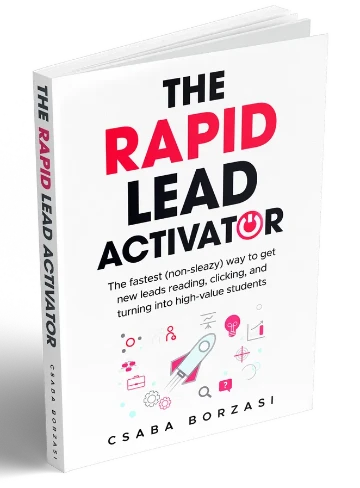
Free book + AI assistant
Turn the Leads Already Joining Your List Into Buyers – Faster
The Rapid Lead Activator reveals the psychology-based framework I use to write welcome sequences that sell – without hype. Normally $9.99 on Amazon, yours free. Plus a bonus AI assistant that writes your first 5 welcome emails for you – in minutes, not days.
Send Me the Rapid Lead Activator →What counts as real value in an email?
BUT…
To really EARN your attention, I also have to give you something genuinely valuable.
Not just another promotional email that doesn’t really give anything useful…
But genuine value that can help you:
– Reach your goals
– Encourage your dreams
– Justify your failures
– Allay your fears
– Confirm your suspicions
– And sometimes even help you throw rocks at your enemies
(Most of that list comes from Blair Warren’s famous “One Sentence Persuasion”.)
If an email can do just ONE of these right, it’s going to be a winner.
Because here’s the thing:
These days, creating high-converting emails isn’t about stuffing as many persuasion techniques and psychological triggers as possible inside…
It’s about building a relationship with your readers by repeatedly giving them genuine value and helping them on their journey…
…without demanding anything in return!
I know this might seem counter-intuitive at first…
But it’s THE best way I know of to really differentiate yourself and rise above your competition in today’s crowded markets.
Do persuasion techniques still matter in emails?
Now…
Does that mean that you should suddenly drop all the various copywriting principles and psychological triggers from your emails?
Of course not.
These techniques are still crucial to your success and you should definitely use them.
But the important idea is this:
The most important part of any good email is the intention behind it
If your intention is helpful and generous, people will embrace you :)
But if your intention is just to make a quick buck, people will ignore you :(
(since nowadays, they can smell a sales pitch a mile away)
Should you still sell in your emails?
So does that mean you shouldn’t sell in your emails anymore?
Of course not!
You should still absolutely sell in your emails…
(I mean, the reason you’re here is that you want to grow your business with email marketing)
ESPECIALLY if you have something that can genuinely help your subscribers accelerate their growth.
In this case, I believe it is your obligation to sell.
Just don’t make it feel like a desperate, needy, cheap sales pitch… because everyone hates that.
How to write emails people want to open
1. Name the value before you write. Which one is this email doing: goals, dreams, failures, fears, suspicions or enemies? If it’s none of them, it’s not ready.
2. Put the help first and the offer after. The main part of the email earns the attention. The offer comes at the end.
3. Invite, don’t chase. One calm “next step offer” after the main part. No begging, no guilt.
4. Read it back for intention. Does it help… or does it just grab?
So remember:
Just like regular healthy relationships, always give your subscribers genuine value that helps them reach their goals… WITHOUT desperately asking for something in return.
That’s what rainmaker emails are all about.
YES, it’s totally ok to invite them to a “next step offer” after the main part of your email…
But don’t come across as needy and desperate.
Here’s an example:
If you’ve enjoyed this email and you’d like to learn more about the deeper psychology behind profitable email marketing, check out my best-selling Rainmaker Email Mastery course.
It’s one of the earliest products I’ve ever created…
But don’t let that fool you:
The timeless evergreen principles I teach inside apply today just as much as when I originally created it.
It’s a great crash course in what makes email marketing work…
And how to send better emails with more confidence that your audience will LOVE – even if you’re not a pro copywriter.
Check it out.
See?
It can be THAT easy :)
Now do go check it out.
Related: Do People Still Read Long Emails? (What a 2,338-Word Email Taught Me)
Free book + AI assistant
Turn the Leads Already Joining Your List Into Buyers – Faster
The Rapid Lead Activator reveals the psychology-based framework I use to write welcome sequences that sell – without hype. Normally $9.99 on Amazon, yours free. Plus a bonus AI assistant that writes your first 5 welcome emails for you – in minutes, not days.
Send Me the Rapid Lead Activator →-Csaba

